



Most ad accounts run on three creative variants. The winning campaigns run on thirty.
That gap, between three and thirty, is where most ad spend disappears. Not because the product is wrong. Not because the targeting is off. Because there weren’t enough creative variants to find the one that actually converts, and the design process was too slow and too expensive to produce them.
The average design agency takes three to seven days to deliver a creative. Revisions add another two. By the time the final file lands, the campaign window has already passed, and the budget spent waiting has generated nothing.
AI creative generation eliminates that bottleneck entirely.
The Real Cost of Manual Creative Production
Before getting into the systems, it’s worth understanding what manual creative production actually costs, not just in agency fees, but in lost performance.
A typical paid social campaign needs 10–20 active creative variants to run proper tests across audiences. A mid-size brand spending $30,000 per month on ads might have 3 variants live at any given time. They’re not running 3 variants because 3 is optimal. They’re running 3 because that’s all the design budget and turnaround time allowed.
With 3 variants, there’s a high probability the winner is somewhere in the 17 untested options. With 30 variants, you find it. The difference in ROAS between the right creative and a mediocre one can be 14× or more.
The math is simple: more variants tested equals better winners found equals lower cost per acquisition across every campaign you run.
6 AI Creative Systems That Change the Math
AI creative generation isn’t a single feature. It’s a layered system of outputs that work together to replace the entire manual production workflow. Here are the six systems that matter.
Performance Scoring Before Launch
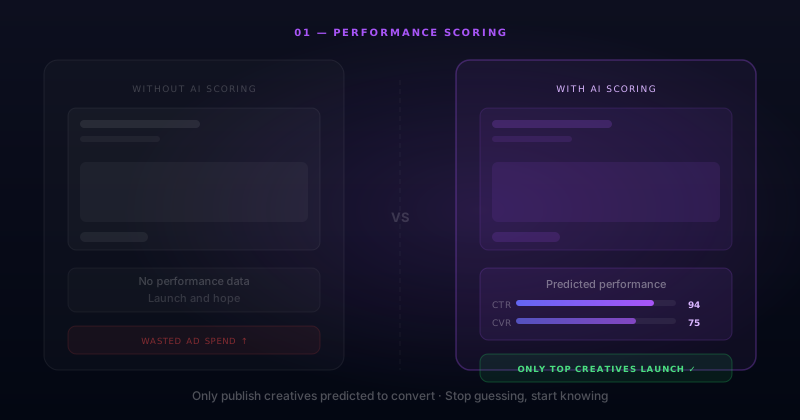
The single biggest inefficiency in manual creative production is that there’s no signal on performance until the ad goes live and burns budget. Every launch is a guess.
AI scoring changes this by predicting click-through rate and conversion rate for every creative before it’s published. The system is trained on conversion data from millions of ads across industries, so it can identify patterns in layout, color contrast, copy placement, and visual hierarchy that correlate with performance.
Only creatives above the score threshold make it to launch. The rest are discarded or revised before a single dollar is spent.
Variant Generation at Scale
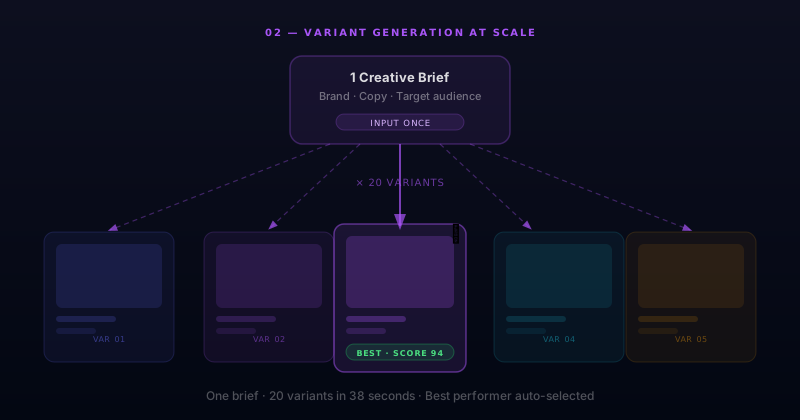
One creative brief, covering brand, copy direction, target audience, and platform, goes in. Twenty or more distinct variants come out, each scored and ranked, in under 60 seconds.
This changes the economics of testing fundamentally. Instead of designing 2 variants and hoping one converts, you generate 20, score them, and launch the top 5. The remaining 15 get archived or used in future campaigns. Nothing is wasted.
The output isn’t generic either. The system applies your brand kit to every variant, ensuring that what scales is still recognisably yours, just in versions you wouldn’t have had the time or budget to test manually.
Multi-Platform Format Export
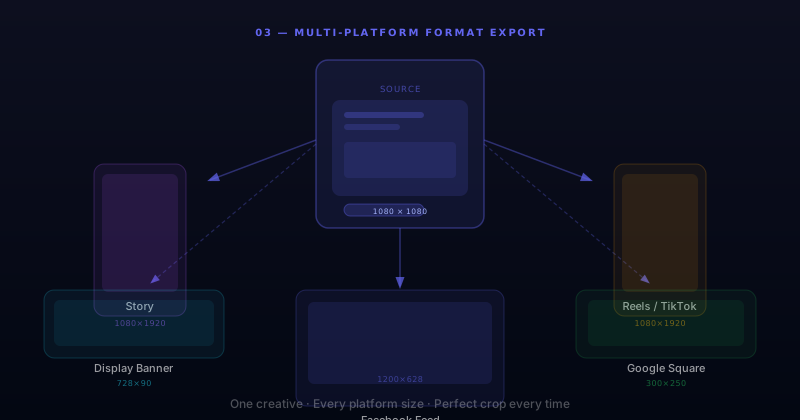
A creative that works on Instagram Feed is the wrong size for Stories, the wrong ratio for Google Display, and the wrong aspect for TikTok. A design team manually resizes each one. That’s four separate files for one creative concept, multiplied by however many variants you’re testing.
AI format export takes one approved creative and generates every required platform size automatically, with correct dimensions, correct safe zones, and correct file specifications. Instagram Feed, Stories, Reels, Facebook Banner, Google Display in all standard sizes, LinkedIn, TikTok.
One brief. Every platform. Zero manual resizing.
A/B Testing Automation
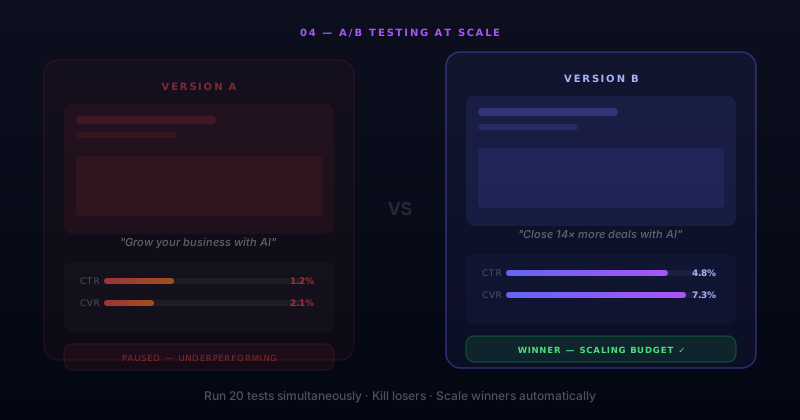
Running a proper A/B test manually means setting up two ad sets, monitoring both, deciding when there’s statistical significance, pausing the loser, and scaling the winner, all manually, all taking time that performance is bleeding through.
AI A/B testing runs all of this automatically. You launch 20 variants simultaneously. The system monitors performance in real time, pauses underperforming creatives when they hit statistical significance thresholds, and reallocates budget toward the winner without any manual intervention.
The practical result is that your ad account is always running the best available creative, not the creative you last had time to test.
Brand-Locked Generation
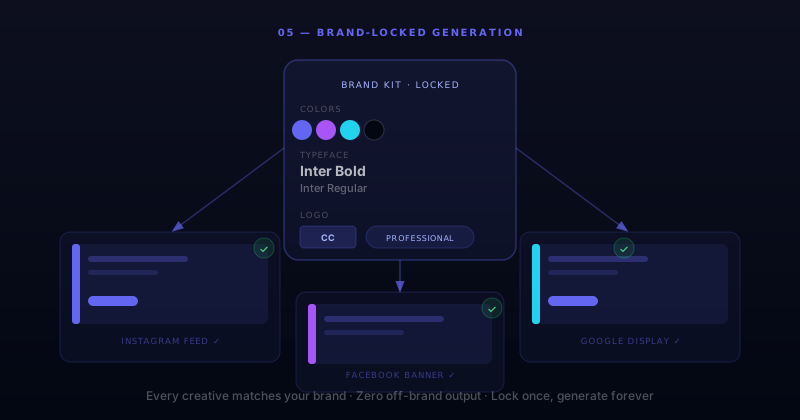
Scale creates a consistency problem for most brands. When you’re generating 30 creative variants a week, the probability of off-brand output goes up with every file a designer produces under pressure.
Brand-locked generation solves this by making brand compliance a constraint on the generation layer, not a quality-check at the end. Your hex codes, typefaces, logo placement rules, and tone of voice are locked in once. Every output that follows is compliant by construction.
You can hand creative generation to any team member and the output will be on-brand, because the system enforces it, not the individual.
Funnel-Stage Retargeting Creatives
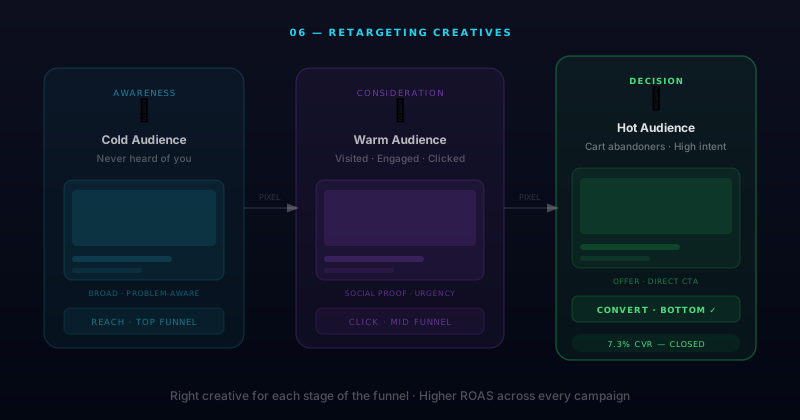
Most brands run the same creative to cold audiences and retargeting audiences. This is one of the most common reasons retargeting underperforms. The message is wrong for where the prospect is in the decision process.
Cold audiences need problem-aware, broad-reach creatives that introduce the category. Warm audiences need social proof and urgency. Hot audiences, including cart abandoners and high-intent visitors, need a direct offer with a hard CTA.
AI creative generation builds separate creative sets for each funnel stage automatically. The brief specifies the audience temperature, and the system adjusts creative style, copy tone, and visual hierarchy accordingly. Every prospect sees the right message for where they are in the decision process.
What These Systems Deliver Together
The aggregate effect of running all six systems isn’t additive. It’s compounding.
When scoring filters out underperformers before launch, variant generation provides the volume to test, multi-format export removes the resizing bottleneck, brand locking maintains consistency at scale, A/B automation keeps the best creative running, and retargeting ensures funnel-appropriate messaging, the result is a creative operation that a three-person in-house team can run at the volume of a thirty-person agency.
At CreativeComplete, we’ve measured a consistent 14× improvement in ad conversions for clients who move from manual creative production to AI-generated, scored creative systems. Not 14%, but 14 times.
The difference isn’t the tool. It’s the combination of volume, speed, scoring, and funnel alignment that the tool makes possible.
How to Get This Running
For the complete production system architecture — how to build all six systems into a single creative operation from brief to scaled deployment — read the AI Ad Creative Production Guide.
The implementation path is straightforward: brand kit upload, copy brief structure, platform selection, scoring threshold configuration.
At CreativeComplete, we set this up with our AI Ad Creative Engine as part of the AI Customer System, integrated with your ad accounts, CRM, and lead routing so that every creative variant is tied to downstream conversion data, not just top-of-funnel click metrics. You see which creative generated which lead, which lead converted, and what the lifetime value was.
Most clients have their first scored creative batch live within 5 days.
If your ad account is still running on three variants and hoping one of them wins, the gap between your current performance and your possible performance is sitting in the variants you haven’t built yet.